
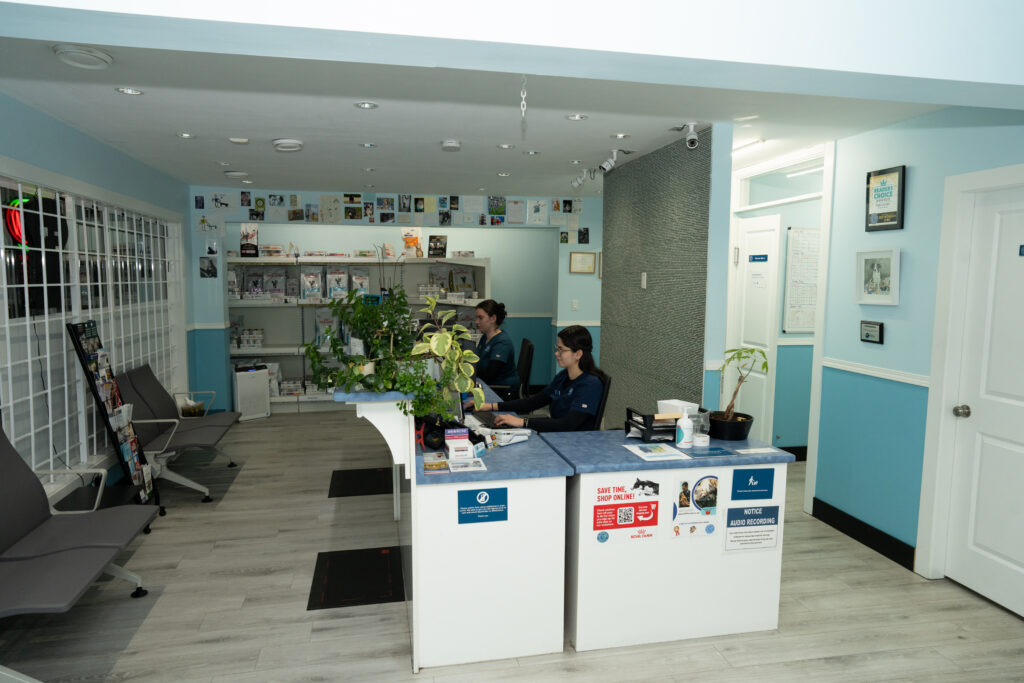
Puppy First-Year Guide in Victoria
Bringing Your Puppy Home
Before They Arrive
- Set up one small, quiet space with a bed, water and a crate or pen. Puppies settle faster in a contained corner than in a whole house.
- Clear the floor. Cords, shoes, houseplants, children’s toys and anything with a strap or a string all go up out of reach.
- Buy the food your puppy is already eating, even if you intend to change it. Switch gradually across a week so the change does not upset their stomach.
- Ask the breeder, shelter or rescue for the vaccination and worming record, and bring it to the first visit. Bring the microchip number too if there is one.
- Order a City of Victoria dog licence, or a Township of Esquimalt licence if you live on that side of the boundary. Both municipalities require a licence once a dog is over four months old.
The First Week
Expect some unsettled nights. Keep everything boring and predictable: the same feeding times, the same toilet spot, the same bedtime. Introduce the crate as a good place rather than a punishment, with meals fed inside it and the door open at first. Hold off on visitors for a few days so your puppy can learn the household before meeting everyone who wants to meet them.
Book a first wellness visit within the first week, even if your puppy had vaccines before you collected them. We weigh them, check the heart, the abdomen, the eyes and the mouth, look for the congenital problems that are easiest to catch early, review the record you brought and set the schedule for the rest of the year. Call us at (778) 265-4500 to arrange it. If you are new to us, the registration form is worth completing before you arrive.
At-a-Glance Vaccine Schedule
This is the standard schedule we work to in British Columbia for a healthy puppy. Your veterinarian may adjust it for your puppy’s history, breed and household.
| Age | Vaccine | Type | Notes |
|---|---|---|---|
| 6 to 8 weeks | DA2PP | Core | Distemper, adenovirus, parvovirus and parainfluenza in one injection. First of the series. |
| 10 to 12 weeks | DA2PP booster | Core | Second of the series. Lifestyle vaccines usually start around now. |
| 12 to 16 weeks | Leptospirosis | Lifestyle, recommended for most dogs here | Two doses given two to four weeks apart in the first year. See the next section. |
| 14 to 16 weeks | DA2PP booster | Core | Final puppy booster. Protection is not considered reliable until this one is given and has had time to take effect. |
| 12 to 16 weeks | Rabies | Core | Recommended in British Columbia, though not required by provincial law. Required if you plan to cross the border with your dog. |
| From 8 weeks, as needed | Bordetella | Lifestyle | For puppies who will board, attend daycare, go to a groomer or join a class. Most facilities ask for it. |
| Around 12 months | DA2PP, rabies and leptospirosis boosters | Core and lifestyle | First adult boosters. Rabies then moves onto a one or three year cycle depending on the product used. |
Until roughly two weeks after that final puppy booster, your puppy is not fully protected. That timing governs where you can safely take them, which the socialization section below deals with directly.
Important Note on Lifestyle Vaccines
Core vaccines are recommended for essentially every dog. Lifestyle vaccines depend on what your dog actually does, and in Victoria that question has clear answers rather than vague ones.
- Leptospirosis. Recommended for most dogs here. The bacteria spread through the urine of rats, raccoons and skunks, and survive in standing water, puddles and damp soil. All three animals are ordinary residents of Vic West, Esquimalt and downtown Victoria, and a puddle on a walk is all the exposure it takes. The 2023 ACVIM consensus statement recommends annual vaccination for every dog over 12 weeks regardless of lifestyle, and we agree with that for this neighbourhood. Leptospirosis also passes to people.
- Bordetella. Recommended if your puppy is going to mix with other dogs. Kennel cough spreads wherever dogs share air. If boarding, daycare, grooming or a training class is in your plans, your puppy needs it, and most facilities will ask to see it.
- Lyme disease. Usually not recommended here, and this is the local difference. Ticks are genuinely common on southern Vancouver Island, but fewer than 1 percent of ticks tested in British Columbia carry the bacteria that cause Lyme disease, and locally acquired human cases run in the single digits most years. Year-round tick prevention matters far more here than the vaccine does. If you travel east with your dog, ask us again, because the answer changes.
- Canine influenza. Rarely indicated here. Worth a conversation only for puppies heading to shows or spend time in high-turnover boarding outside the province.
We go through your puppy’s actual week rather than handing out a standard list. There is no benefit in giving a vaccine your dog has no use for.
Spay and Neuter
Timing has moved on from a single fixed age. In larger breeds, removing sex hormones before skeletal growth finishes is associated with a higher rate of joint problems, so bigger dogs generally benefit from waiting. Smaller breeds do not carry that risk in the same way.
| Adult size | Typical timing | Notes |
|---|---|---|
| Small, under 10 kg | Around 6 months | Growth finishes early and waiting brings little benefit. |
| Medium, 10 to 25 kg | 6 to 12 months | Discuss with your veterinarian based on breed, sex and household. |
| Large, 25 to 40 kg | 12 to 18 months | Later timing is associated with a lower rate of joint injury. |
| Giant, over 40 kg | 18 to 24 months | Growth plates close late. Behaviour and household circumstances also factor in. |
Vic West Pet Hospital offers more than one route to sterilization, which is unusual in general practice and worth knowing about before you book. Alongside conventional spay and castration we offer vasectomy, ovariectomy and ovary-sparing spay, so that owners who want to prevent breeding while leaving hormones in place have a real option rather than a single default. Not every dog needs the same procedure. We will lay out the trade-offs of each and then support the decision you make. Surgery is performed with anesthesia monitoring throughout and pain relief that continues after your dog goes home. Surgical availability is confirmed by phone, so call (778) 265-4500 to talk it through.
Nutrition for Your Puppy’s First Year
Choose a complete puppy food carrying an AAFCO statement for growth. If your puppy is likely to finish over about 25 kg, use a food formulated for large breed growth, which controls calcium and energy density so they do not grow too quickly. Growing fast is not the same as growing well.
- 6 to 12 weeks: four meals a day.
- 3 to 6 months: three meals a day.
- 6 to 12 months: two meals a day, which most dogs stay on for life.
- Measure portions rather than leaving food down. Weight put on in the first year is difficult to take off later.
- Keep treats under roughly ten percent of daily calories, and use part of the daily ration for training rather than adding to it.
- Fresh water always available, and no raw salmon, trout or steelhead in any form. The reason is in the Local Health Notes below and it is a serious one.
Some puppies need a therapeutic diet for a specific reason, such as a digestive or urinary condition or a food sensitivity. Those are chosen and monitored by your veterinarian rather than picked off a shelf. If you are unsure what to feed, ask us at the next visit and we will make a recommendation for your individual dog rather than a general one.
Parasites: What to Know
Most puppies arrive carrying intestinal worms. That is normal biology rather than a sign that anyone did anything wrong, because roundworms and hookworms pass from the mother.
- Worming. Every two weeks from two to twelve weeks of age, then monthly until six months. We can check a stool sample at routine visits and adjust from there.
- Fleas. Year-round prevention on this coast. Our winters are mild enough that fleas never properly die back, and a Vic West flea problem in January is not unusual.
- Ticks. The western blacklegged tick is established across southern Vancouver Island and is active whenever the weather is above freezing, so tick prevention here is a year-round job rather than a summer one. Run your hands over your dog after walks in long grass or brush, and check the ears, armpits, groin and between the toes.
- Heartworm. Prevalence across Western Canada sits at 0 to less than 1 percent, and the only endemic pocket in British Columbia is the southern Okanagan. Most coastal cases involve a dog who travelled. Tell us before you take your puppy to the Okanagan, Ontario or the southern United States and we will cover it properly. Routine year-round heartworm prevention is not standard practice here, which is a real difference from what you may read on North American websites.
- Giardia. Common in puppies who drink from puddles, ponds and shared water bowls. It causes soft, greasy stool that keeps coming back, and it is worth testing rather than guessing.
- Family safety. Some intestinal worms pass to people, particularly young children. Wash hands after handling stool, and pick up in the yard promptly rather than weekly.
House Training
Puppies learn from routine and repetition, not from being corrected after the event. Take your puppy out first thing in the morning, after every meal, after every nap, after play and last thing at night. Go to the same spot, wait, and reward the instant they finish rather than once you are back indoors.
A rough guide to bladder control is one hour per month of age, so a three month old needs a break roughly every three hours. Accidents are part of the process. Clean them with an enzymatic cleaner so the odour does not bring your puppy back to the same patch of carpet, and never punish after the fact, because the puppy cannot connect the two events.
A crate helps because dogs prefer not to soil where they sleep. Size it so your puppy can stand up, turn around and lie down flat, but not so large that one end becomes a toilet. Victoria weather being what it is, teach the toilet routine in the rain from the start rather than only on dry days, or you will be renegotiating it every November.
Socialization and Cooperative Care
The socialization window runs from roughly three to twelve weeks and then it closes. What a puppy meets calmly in that period tends to stay unremarkable to them for life, and what they never meet can become frightening later. This is the single most valuable investment you can make in your dog’s future behaviour.
The awkward part is that your puppy is not fully protected during that same window, so socialize carefully rather than not at all. Carry them through busy places such as the Songhees walkway or the streets around Esquimalt Road so they see bicycles, buses, scooters and strangers from a safe height. Invite fully vaccinated adult dogs to your home. Stay off the leash optional areas at Vic West Park, Banfield Park and Dallas Road until roughly two weeks after the final booster, because parvovirus survives in soil for months and shared ground is exactly where an unprotected puppy meets it. A well-run puppy class in Victoria that requires proof of vaccination before enrolment is usually the best balance of exposure and safety.
- Introduce them gently to men, women, children, hats, umbrellas, wheelchairs, traffic noise, the vacuum and the sound of rain on a window.
- Handle paws, ears and mouth daily so nail trims and examinations are not a fight in a year’s time.
- Practise cooperative care: reward standing still, being lifted, having a collar held and stepping onto a scale.
- Keep sessions short and end them while your puppy is still enjoying themselves. Fear learned in this window is slow to undo.
Children and Other Pets
Children
Supervise every interaction until you are confident in both parties. Teach children to let the puppy come to them, to skip hugging around the neck, and to leave the puppy alone while they are eating or asleep. Give the puppy a space children may not enter, and hold that line, because a puppy with no escape route learns to growl instead of leaving.
Other Dogs
Introduce on neutral ground rather than in the resident dog’s living room where you can. Keep first meetings short and finish them while both dogs are still relaxed. Feed separately, pick up toys and chews at the start, and make sure the older dog has somewhere to retreat to. Most adult dogs correct a puppy appropriately, and that is normal communication rather than aggression.
Cats
Cats need height and an exit route. Put up shelves, use a baby gate the cat can clear but the puppy cannot, and feed the cat somewhere out of reach. Do not let the puppy chase, even in play, because it becomes a habit within days and a frightened cat may stop using the litter box, which turns one problem into two.
Foreign-Body Ingestion Hazards
Puppies swallow things. Some pass, some do not, and an obstruction is a surgical problem that gets worse the longer it waits. If you know or suspect your puppy has swallowed something, phone us at (778) 265-4500 rather than waiting to see what happens.
- Common culprits: socks, underwear, corn cobs, stone fruit pits, squeakers, rope toy strands, hair ties, cooked bones, fish hooks and lures picked up along the harbour.
- Signs of a blockage: repeated vomiting, refusing food, a painful or bloated abdomen, straining without producing stool, and a puppy who has gone unusually quiet.
- Do not try to make your puppy vomit at home. Some objects do more damage coming back up than going down, and some products used for this are unsafe in dogs.
We can assess with radiography and in-house laboratory work the same day during clinic hours, and move to surgery from there if that is what the findings call for.
Holiday and Household Hazards
Most poisonings we see involve ordinary household items rather than exotic ones.
- Toxic foods. Chocolate, xylitol in sugar-free gum and some peanut butters, grapes and raisins, onions and garlic, macadamia nuts, alcohol and raw bread dough.
- Toxic plants. Locally, foxglove and yew are common in Victoria gardens and both are seriously toxic. Daffodil and tulip bulbs go in the ground in autumn, which is exactly when a puppy is digging. Rhododendron and English ivy are everywhere on this side of the harbour.
- Mushrooms. Death cap mushrooms grow throughout Greater Victoria and are dealt with in the Local Health Notes below. Treat any mushroom in a lawn or boulevard as a hazard while your dog is young.
- Household products. Human pain relief tablets, antifreeze, slug and snail bait, rodent bait, and cannabis in every form including edibles and discarded joints on the street.
- Seasonal. Ribbon, tinsel, glass ornaments, cooked bones from festive meals, and the string from a turkey, which is one of the most reliable December surgeries in this business.
If you think your puppy has eaten something harmful, call us straight away during clinic hours and bring the packaging if you still have it. Poison control lines are listed on our resources page for the hours we are closed.
Puppy Dental and Developmental Notes
Puppies have twenty-eight deciduous teeth, usually called baby teeth, which start falling out around four months as forty-two adult teeth come through. Teething runs from roughly three to seven months, and the chewing that comes with it is normal rather than naughty. Offer appropriate chews and expect some mouthing of hands and sleeves.
- Retained deciduous teeth. If a baby tooth is still sitting beside its adult replacement, most often the canines, it needs to come out. Two teeth in one socket trap food and push the adult tooth out of position.
- Malocclusion. Bites that do not line up can leave a tooth striking the palate or an opposing tooth. Some cases need intervention and others simply need watching, and the difference is worth checking rather than assuming.
- Umbilical and inguinal hernias. Small openings at the navel or the groin. Many are minor and can be closed at the same time as spay or neuter surgery, which saves a second anesthetic.
- Cryptorchidism. One or both testicles failing to descend. A retained testicle carries a higher cancer risk and is removed rather than left in place.
- Brachycephalic airway signs. In flat-faced breeds, noisy breathing, snorting, gagging after eating and poor exercise tolerance are worth raising early rather than accepting as normal for the breed. We perform corrective airway surgery for stenotic nares, elongated soft palate and cleft palate here. We check for all of these at routine puppy visits, which is part of why those early appointments earn their place. Start brushing teeth in the first year while your puppy still thinks a toothbrush is a game.
Grooming Basics
Start grooming before your puppy needs it. A puppy who is used to being handled becomes a dog who tolerates a nail trim. A puppy who is not becomes a dog who needs sedation for one.
- Brush short coats weekly, and long or double coats several times a week. Wet coastal weather means a damp dog most of the winter, so dry the belly, legs and ears after walks rather than letting them stay damp.
- Trim nails every two to four weeks. If you can hear them clicking on the floor, they are already too long.
- Check ears weekly, especially in floppy-eared breeds and in any dog who swims.
- Introduce toothbrushing early. Daily is ideal and a few times a week still helps.
- Check between the toes after beach walks. Barnacle cuts, glass and fish hooks along the harbour shoreline are all things we see.
Poodle crosses, doodles and other continuously growing coats usually need professional grooming every six to eight weeks from around four months of age. Book a short, low-pressure first appointment before the coat actually needs work, because the first experience sets the tone for every one after it. Grooming is not a service we offer at the hospital, so ask us if you would like to talk through what a coat type needs before you choose a groomer.
Local Health Notes
A few things matter more for a puppy in Victoria than they would somewhere else.
- Licensing is a legal requirement, and which one depends on your address. The City of Victoria requires every dog over four months old to be licensed, renewed annually on the calendar year, with fines of up to $125 a day for an unlicensed dog. The Township of Esquimalt runs its own program with the same four month threshold and its own licence valid to 31 December. We sit on Esquimalt Road close to the boundary, so check which municipality you actually live in. A Victoria licence does not cover an Esquimalt address.
- Leash optional areas have specific hours, and the rules are enforced. Vic West Park is leash optional every day from 6:00 am to 10:00 pm. Banfield Park is leash optional only between the basketball court and the Victoria West Community Centre parking lot, from 1 April to 30 September during 6:00 am to 9:00 am and 5:00 pm to 10:00 pm, and from 1 October to 31 March during 6:00 am to 10:00 pm, with dogs on leash everywhere else in the park including the dock. Along Dallas Road the leash optional strip runs between the multi use path and the seaside path, and the beach itself is on leash. Fines run from $100 to $300.
- Wait before you use any of them. Hold off on leash optional areas until roughly two weeks after the final puppy booster. Parvovirus survives in soil for months and shared ground is where an unprotected puppy meets it.
- Salmon poisoning disease is a genuine risk here and it is often fatal. Dogs pick up Neorickettsia helminthoeca from a fluke carried in raw salmon, trout and steelhead, and the condition is recognized on southern Vancouver Island. Untreated, up to 90 percent of affected dogs die within seven to ten days. The Goldstream River chum run starts in mid October and peaks in early to mid November, about twenty five minutes from downtown Victoria, and dead and dying fish end up along riverbanks and beaches through the autumn. Keep your dog leashed near spawning streams, never feed raw salmonid fish, and if your dog eats a dead fish, phone us rather than waiting for signs. Fever, vomiting, diarrhea and swollen lymph nodes usually start five to seven days later.
- Death cap mushrooms grow throughout Greater Victoria. Amanita phalloides is established here, fruiting in autumn and sometimes earlier where lawns are watered heavily. It grows under imported beech, hornbeam, chestnut and English oak, and has now been recorded with our native Garry oak, which puts it in ordinary boulevards, parks and front gardens. It is fatal to dogs. Teach a solid leave it, sweep your own lawn, and treat any mushroom your puppy picks up as an urgent call.
- Blue green algae in local lakes. The Capital Regional District posts cyanobacteria advisories at Elk and Beaver Lake most years, sometimes for months at a time. The toxins can be fatal to dogs and can be present when the water looks clear. Check CRD advisories before a swim, and rinse your dog after any lake swim rather than letting them lick the coat dry.
- Fleas and ticks are a year-round job on this coast. Mild winters mean fleas never properly die back, and the western blacklegged tick is established across southern Vancouver Island. The good news is that fewer than 1 percent of ticks tested in British Columbia carry the bacteria that cause Lyme disease, so consistent prevention and prompt tick removal matter far more here than the Lyme vaccine does.
- Rats and raccoons make leptospirosis a Vic West problem. Both are common in this neighbourhood and both shed the bacteria in urine that survives in puddles and damp ground. This is the local case for the leptospirosis vaccine.
- Rabies works differently in British Columbia. Bats are the only wildlife reservoir in the province, and vaccination is recommended rather than required by provincial law. That surprises owners who move here from places that mandate it. You will still need it, current and documented, if you plan to take your dog across the border or fly internationally.
- Rodent bait rules changed in 2023. British Columbia now prohibits the sale and use of second generation anticoagulant rodenticides by the public and most businesses. First generation products are still on the shelf and are still dangerous to a puppy who finds a bait station behind a restaurant bin. If you suspect your dog has found one, phone us and bring the packaging.
- Puddles, ponds and shared bowls. Giardia is easy to pick up and hard to shift once it settles in. Carry water on walks rather than letting your puppy drink from standing water.
Low-Stress Veterinary Visits
Before the Visit
Bring your puppy hungry so treats actually work, and bring the treats they like rather than the ones we have. Take car trips that do not end at a clinic, so the car does not become a warning sign in itself. Bring the vaccination record, the licence details and a stool sample if we have asked for one. Note our daily lunch closure from 1:00 pm to 1:30 pm when you plan your arrival.
In the Clinic
Keep your puppy on your lap or on a short leash beside you in reception rather than on the floor greeting every dog who walks in. Dogs and cats have separate exam rooms here, which keeps the waiting easier on everyone. Stay relaxed yourself, because puppies read their handlers closely, and our team will work at your puppy’s pace and reset if they start to feel overwhelmed.
Happy Visits
Call Vic West Pet Hospital and ask to bring your puppy in for a happy visit: no examination, no vaccine, just a weigh-in, a fuss from the team and a few treats. Ten minutes now saves a great deal of stress in a year’s time, and we are glad to do it. Call (778) 265-4500 to find a quiet slot.
When to Contact Us
Call Vic West Pet Hospital at (778) 265-4500. We are open Monday 9:00 am to 6:00 pm, Tuesday to Friday 8:00 am to 6:00 pm and Saturday 9:00 am to 6:00 pm, with a daily lunch closure from 1:00 pm to 1:30 pm. We are closed Sundays and statutory holidays. If you are not sure whether something can wait, phone and describe it rather than deciding on your own.
Contact Us Same Day For
- Repeated vomiting or diarrhea, particularly with blood, or in a puppy who has gone quiet with it
- Refusing food for more than one meal in a young puppy, who has very little reserve
- Difficulty breathing, collapse or a seizure
- A swollen, hard or painful abdomen
- Suspected swallowing of an object, a toxic food, a mushroom, rodent bait or any household product
- Straining to pass urine or stool without producing anything
- Any wound, a limp that does not settle, or an eye that is closed, cloudy or weeping
- Eating a dead fish, or fever and swollen glands in the days after a walk near a spawning stream
Schedule a Routine Appointment For
- Vaccine boosters and the routine puppy series
- Worming and parasite prevention
- Spay, neuter or ovary-sparing surgery planning
- Diet questions, slow weight gain or a puppy gaining too fast
- Teething questions and retained baby teeth
- Behaviour and training questions
- Microchipping and licence paperwork
- International health certificates if travel is on the horizon
Pet Insurance
If you are considering pet insurance, buy it before your first appointment rather than after. Insurers exclude pre-existing conditions, and anything written into a record at a visit counts as pre-existing from that day forward. A new puppy is the ideal moment because there is no history yet.
Providers operating in Canada include Trupanion, Pets Plus Us, Petsecure, Furkin and Desjardins. This list is educational rather than an endorsement, and we receive nothing for naming any of them. Compare annual limits, deductibles, waiting periods and how each handles hereditary and congenital conditions, which matters more in purebred and flat-faced breeds. Read what each excludes before you read what each covers.
If you have questions about paying for a visit or submitting a claim, ask our team and we will walk you through it.
Frequently Asked Questions
When does my puppy need their vaccinations in Victoria?
Puppies start the DA2PP series between six and eight weeks and continue with boosters every two to four weeks until sixteen weeks of age. Rabies is usually given between twelve and sixteen weeks, and leptospirosis needs two doses two to four weeks apart in the first year. Call us at (778) 265-4500 and we will build the schedule around the record your puppy came with, so nothing is repeated unnecessarily. Bring that paperwork to the first visit.
What age should my puppy be spayed or neutered?
It depends on adult size rather than a single age. Small dogs are usually done around six months, while large and giant breeds often benefit from waiting twelve to twenty-four months so the growth plates can close first. Later timing in big dogs is associated with a lower rate of joint problems. We also offer vasectomy and ovary-sparing spay for owners who want to prevent breeding without removing hormones, so it is worth a conversation rather than a default.
Does my puppy really need the leptospirosis vaccine in Victoria?
For most dogs in Vic West and the surrounding area, yes. Rats, raccoons and skunks all shed the bacteria in urine, and it survives in puddles and damp ground for weeks. The 2023 ACVIM consensus statement recommends annual vaccination for every dog over twelve weeks regardless of lifestyle. It also passes to people, which is another reason we take it seriously here.
When can I take my puppy to Vic West Park or the Dallas Road off-leash area?
Wait until roughly two weeks after the final puppy booster at around sixteen weeks. Parvovirus survives in soil for months, and shared ground is exactly where an unprotected puppy meets it. In the meantime you can still socialize safely by carrying your puppy through busy areas and inviting fully vaccinated adult dogs to your home. Note that Vic West Park and Banfield Park have set leash optional hours, and the Banfield area is limited to one part of the park.
My puppy has worms. Did I do something wrong?
No. Most puppies are born with roundworms or pick up hookworms from their mother, so routine worming is standard regardless of how well cared for a puppy is. We worm every two weeks from two to twelve weeks of age, then monthly until six months. Bring a stool sample to routine visits and we can check it in our own laboratory rather than sending it away.
What food should I feed my new puppy?
Choose a complete puppy food carrying an AAFCO statement for growth, and if your puppy is likely to finish over about twenty-five kilograms, use one formulated for large breed growth so calcium and energy density are controlled. Feed measured meals rather than leaving food down, and change brands gradually across a week. One local rule matters more than brand choice: never feed raw salmon, trout or steelhead, because of salmon poisoning disease.
My puppy still has a baby tooth beside the adult one. Does it need to come out?
Usually yes, particularly with the canine teeth. Two teeth in one socket trap food and push the adult tooth out of position, which causes crowding and gum problems later. We check the mouth at every puppy visit and will tell you whether it is worth removing and when. Often it can be done at the same time as spay or neuter surgery so there is only one anesthetic.
Contact Block
Vic West Pet Hospital
526 Esquimalt Road, Victoria, BC V9A 3L4
(778) 265-4500
reception.vwph@gmail.com
Hours: Monday 9:00 am to 6:00 pm. Tuesday to Friday 8:00 am to 6:00 pm. Saturday 9:00 am to 6:00 pm. Sunday and statutory holidays: closed.
We also close for lunch from 1:00 pm to 1:30 pm.
Disclaimer
This guide is intended for general educational purposes only and does not constitute veterinary medical advice. Always consult a licensed veterinarian for your pet’s individual health needs.