
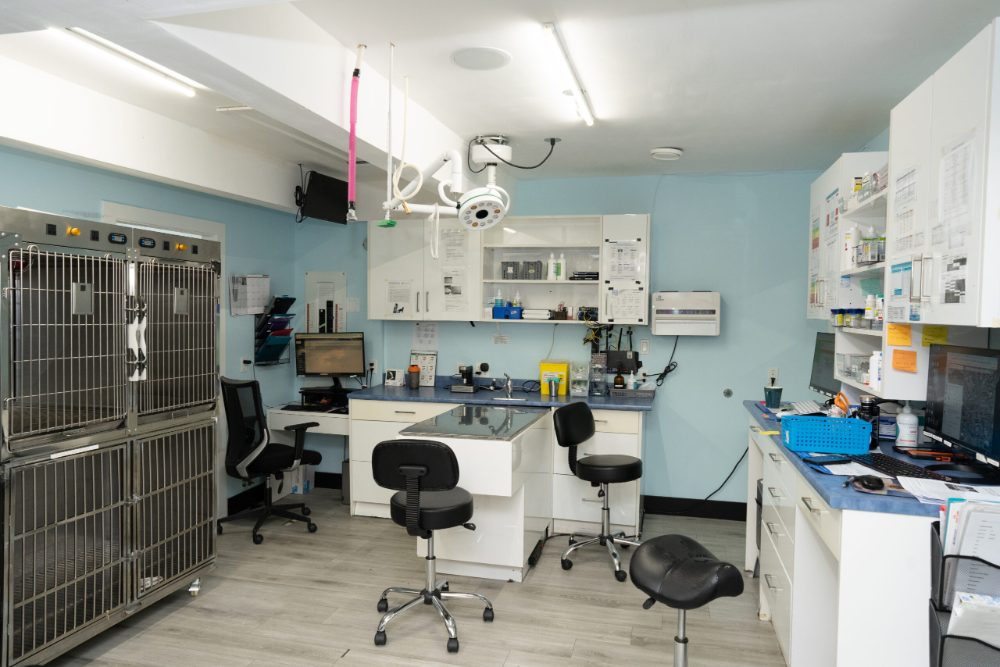
Pet Diagnostics for Dogs and Cats in Victoria
Pet diagnostics close the gap between “something is wrong” and “here is what we are dealing with”. A physical examination gets a veterinarian a long way, but hands cannot see a bladder stone, read a white cell count or tell a full stomach from an enlarged spleen.
In-house diagnostic tools allow us to identify health issues quickly, often during the same visit.
X-Ray, Ultrasound and Image Review
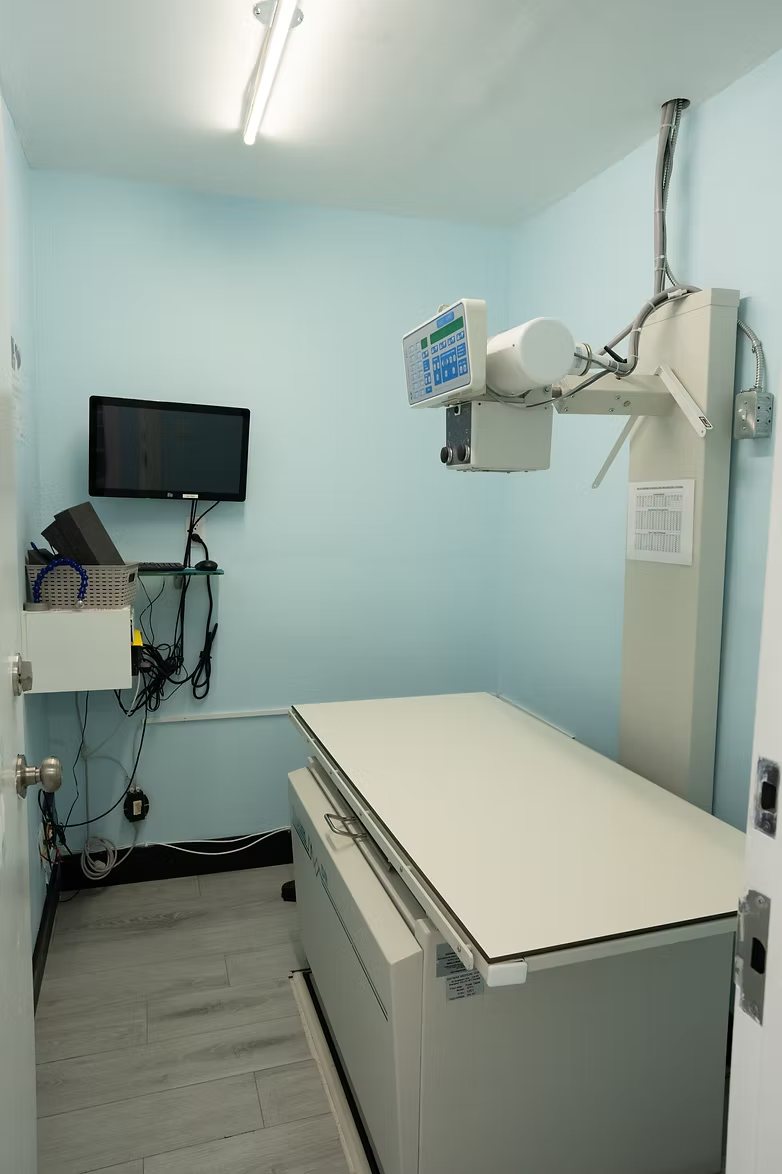
Digital radiography (X-rays)
Digital radiographs show bone, chest and abdominal structures in a single quick exposure, and the image appears on screen within seconds. X-ray is the right tool for a suspected fracture, joint wear, a change in the heart’s outline, gas or fluid where it should not be, or a swallowed object.
Images stay on file, so this year’s radiograph can be compared directly with one from two years ago.
Ultrasound
Ultrasound builds a live picture of soft tissue, so a scan can show the shape and texture of the liver, kidneys, spleen, bladder wall and intestines while your pet breathes. It is painless and uses no radiation.
A small patch of fur is clipped so the probe makes proper contact, and it grows back. Most scans take fifteen to thirty minutes.
Dental radiography and image review
Dental radiographs show the roots and bone below the gumline that cannot be seen during an oral exam. Every image, dental or otherwise, is reviewed by our veterinarians as part of your pet’s diagnostic imaging consultation.
Laboratory Testing on Site
Running samples in our own laboratory rather than shipping them out is the difference between a plan today and a plan on Thursday, which matters most for an unwell pet. A blood panel counts red and white cells and platelets and shows how the liver, kidneys and other organs are working, while urinalysis checks concentration, sediment, protein and sugar.
Some specialized samples still go to an external laboratory. When that happens, we tell you and give you a realistic timeline.
In-house laboratory
- Bloodwork and chemistry panels
- Urinalysis
- Fecal testing and parasite screening
- Rapid infectious disease testing
Testing Decisions and Results
When we recommend testing
Testing is never automatic. We recommend imaging or laboratory work when it will change what happens next: before an anaesthetic, when an unwell pet’s signs point in more than one direction, when a senior needs a baseline for future comparison, or when a long-running condition needs monitoring.
Before anything is run, you will know what question each test answers and what it costs. Saying no, or not yet, is always a legitimate answer.
Understanding the results
A number on a page is not an answer by itself. Results are read against your pet’s history, previous values and examination findings, because a reading that is unremarkable for one animal can be meaningful for another.
Our veterinarians explain what was found, what it likely means and what the sensible next steps are. Sometimes the honest answer is that a borderline result is worth repeating in a few weeks rather than acting on today.
Ready to book your pet's visit?
Our AAHA-accredited team is here to provide the right care, at the right time, for every stage of your pet’s life.
FAQ
Will my pet need to be sedated for an X-ray or ultrasound?
Does my pet need to fast before bloodwork?
Related Services & Resources
All veterinary services
Medical services for pets
Surgery and anaesthesia
Pet resources and links
Common questions answered
Reviewed by the Vic West Pet Hospital veterinary team. Last updated October 2026.