
Dental Care for Dogs and Cats in Victoria
Signs Your Pet May Need Dental Care
Dogs and cats rarely show dental pain, so problems are easy to miss. Book a dental examination if you notice any of these signs:
- Persistent bad breath
- Brown or yellow build-up along the gumline
- Red or bleeding gums
- Drooling
- Chewing on one side or dropping food
- Pawing at the face
- A broken tooth
- An unkempt coat in older cats
Cats often show almost nothing until a problem is well advanced, which is why we check the mouth at every routine visit.
What Happens During a Dental Visit
Dental disease is one of the most common — and most overlooked — health issues in pets. We provide full dental care under anaesthesia for safe, thorough evaluation and treatment. Most visits are booked as a day admission, with your pet going home the same afternoon.
Oral examination
We examine the mouth tooth by tooth and record pockets, loose teeth, fractures and gum recession on a dental chart, grading any periodontal disease. The chart lets us compare this visit with the next.
Dental X-rays
Most of each tooth sits below the gumline. Full-mouth radiographs reveal root abscesses, bone loss, retained roots and painful tooth resorption in cats, so treatment decisions are based on evidence rather than appearance. We will show you what we found.
Scaling and polishing
Plaque and tartar are removed above and below the gumline, where periodontal disease does its damage, and gum disease is treated. Polishing then smooths the tooth surface so plaque cannot cling straight back on. Gingivitis caught early is largely reversible.
Extractions, when needed
Teeth that cannot be saved, such as a fractured tooth with exposed pulp, an abscessed root or a resorptive lesion, are removed surgically and the site is closed with dissolving sutures. Leaving a painful tooth in place is not a kindness.
Anaesthesia and Aftercare
Safe anaesthesia
Every dental patient is anaesthetized. Probing, scaling below the gumline, radiographs and extractions cannot be done safely or comfortably on an awake animal, and anaesthesia-free cleaning only polishes the visible crown. Bloodwork is recommended beforehand so the anaesthetic plan suits your pet, a team member monitors your pet throughout, and local anaesthetic blocks are added for extractions.
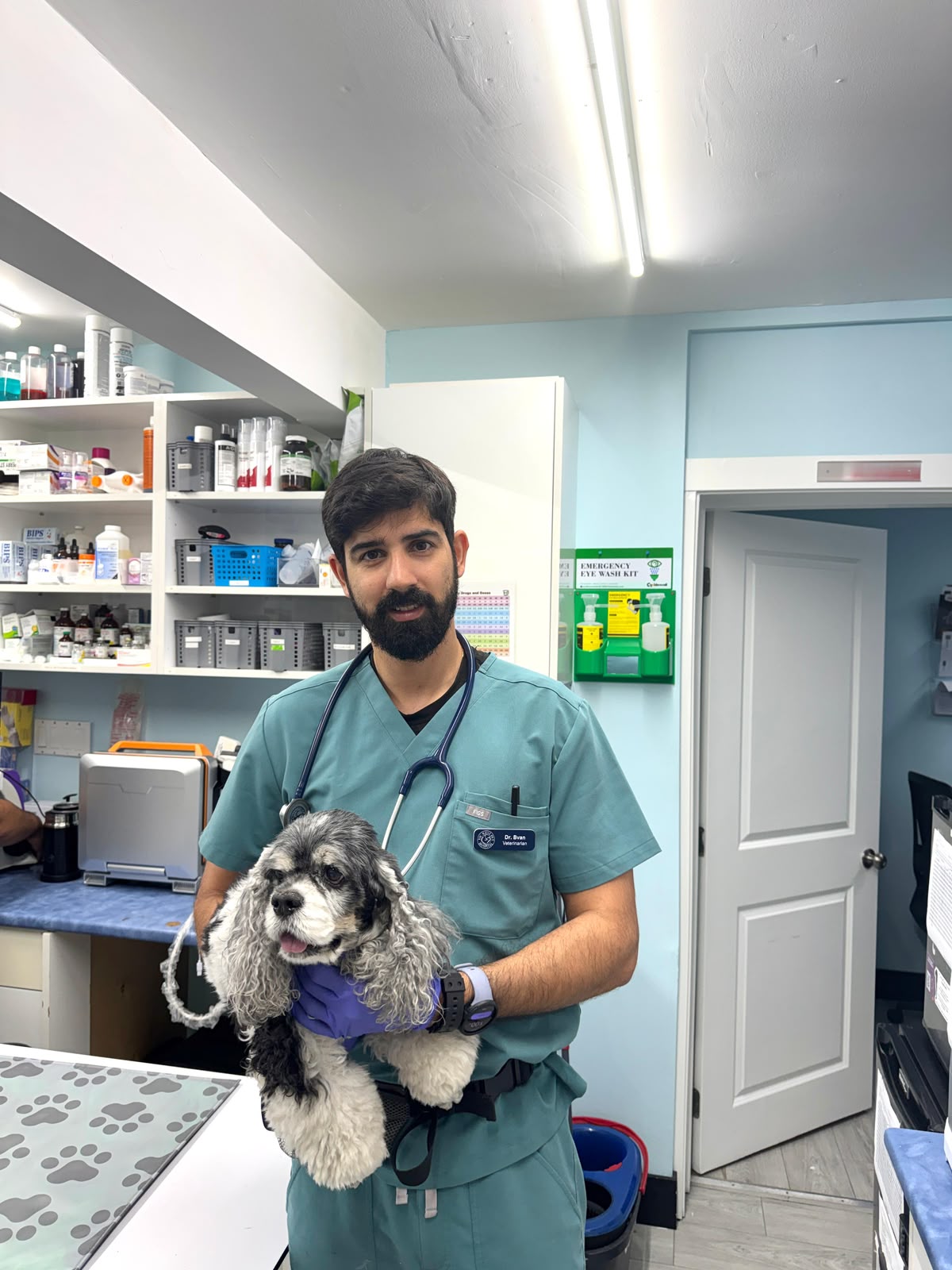
Dental work is carried out by our veterinarians, including co-owner Dr. Bvandeep Shergill, and we will talk you through the anaesthetic plan before the day.
Aftercare and home dental care
Most pets go home the same afternoon and eat within a day, often softened food at first. You will receive written instructions covering feeding, pain control and what to watch for at any extraction sites, and many owners notice a brighter pet within a couple of weeks.
Between visits, daily brushing is the most useful thing you can do. Introduce it gradually, use a toothpaste made for pets, and ask our team to show you how.
Ready to book your pet's visit?
Our AAHA-accredited team is here to provide the right care, at the right time, for every stage of your pet’s life.
FAQ
How often should my dog or cat have a dental visit?
Is bad breath always a sign of dental disease?
Related Services & Resources
All veterinary services
Routine pet care visits
Surgery and anaesthesia
Kitten first-year guide
Read the clinic blog
Reviewed by the Vic West Pet Hospital veterinary team. Last updated October 2026.