Surgical Services for Dogs and Cats in Victoria
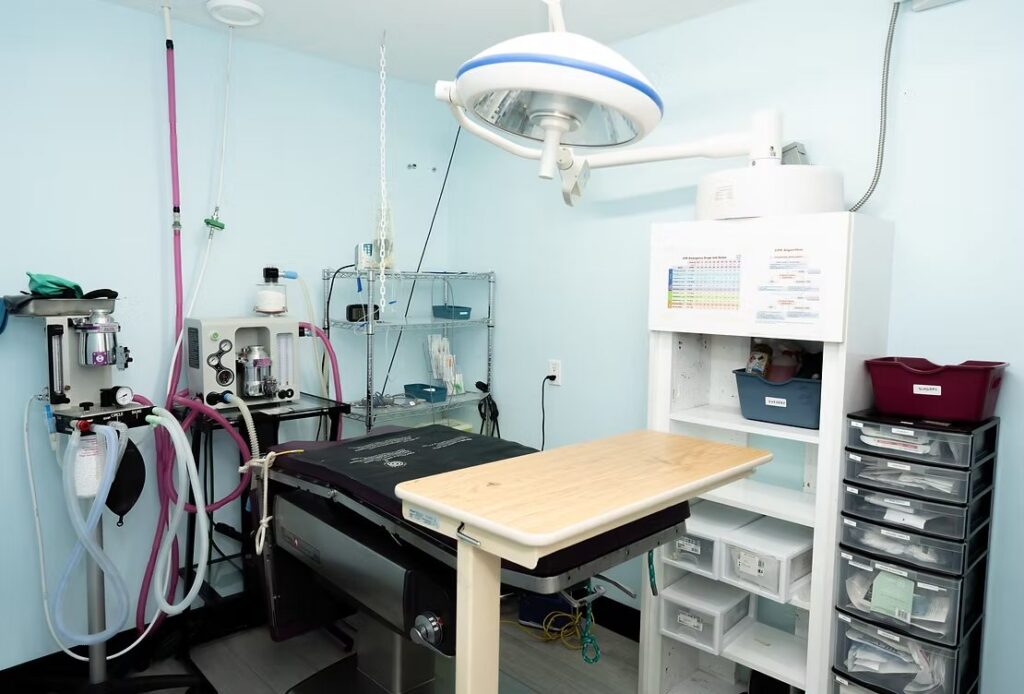
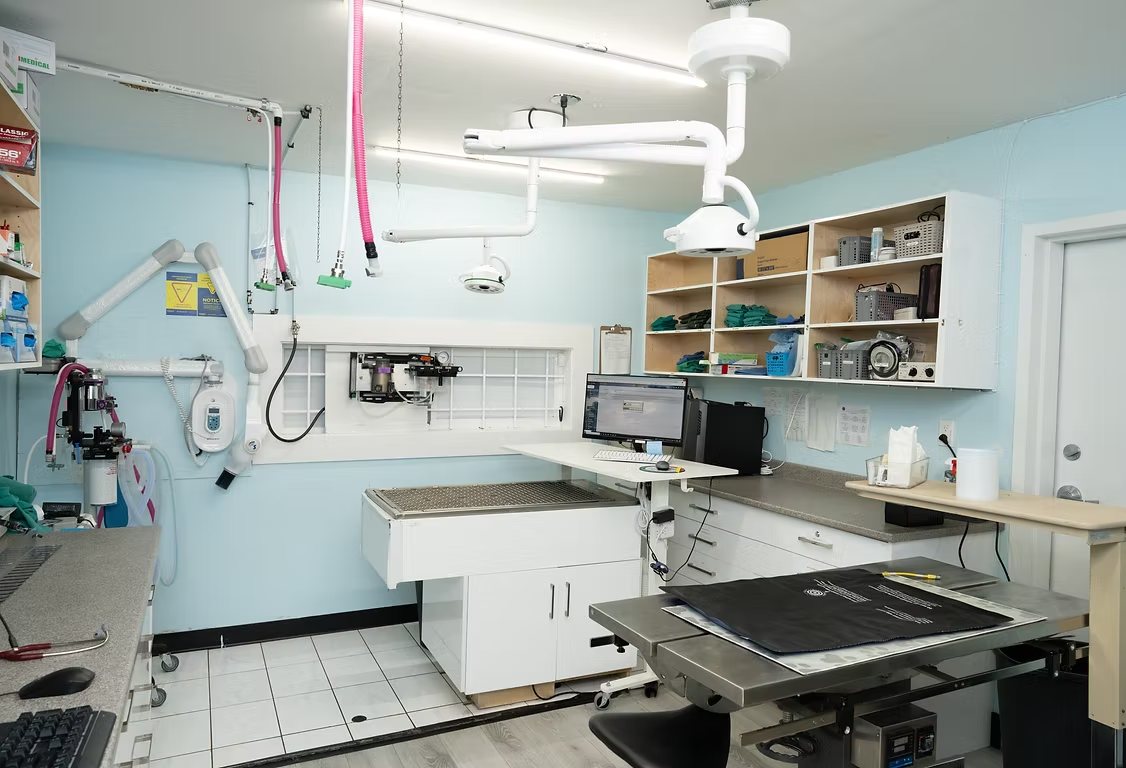
From routine sterilization to complex soft tissue and orthopedic procedures, our surgical team operates with precision, modern equipment and a strong focus on safe anaesthesia and pain management.
Before anything is booked, we explain your options and their trade-offs clearly, then support the decision you make for your dog or cat.
Sterilization Options for Dogs and Cats
We offer five sterilization procedures rather than a single default. All of them prevent unwanted litters. Where they differ is what they remove, what they leave in place and whether natural hormone production continues, which can influence growth, body shape, continence, behaviour and long-term health.
There is no single right answer for every pet. We explain the practical trade-offs of each option and help you weigh them against your pet’s breed, adult size, age and household.
Timing matters as much as method. For some breeds it is sensible to wait until the growth plates have closed; for others there is little reason to delay. We will recommend timing for your individual pet rather than a blanket age.
Options for male pets
- Castration (neuter) — removes the testicles and, with them, the main source of male hormones
- Vasectomy (hormone-sparing) — sterilizes while natural hormone production continues
Options for female pets
- Traditional spay (OHE) — removes the ovaries and the uterus
- Ovariectomy — removes the ovaries and leaves the uterus in place
- Ovary-sparing spay (hormone-sparing) — removes the uterus and leaves the ovaries, so hormone production continues
Soft Tissue & Orthopedic Surgery
Our veterinarians perform a wide range of soft tissue, abdominal and orthopedic procedures for dogs and cats. Masses removed during surgery can be sent for laboratory analysis, and with diagnostic imaging and an in-house laboratory under one roof, the pre-surgical picture is usually complete before your pet is booked.
Orthopedic surgery
- TPLO (Tibial Plateau Leveling Osteotomy)
- Lateral imbrication
- Fracture repair
- Luxating patella correction
Specialist referrals
Our veterinarians are general practitioners, not board-certified specialists. When a case calls for equipment or training beyond general practice, we will tell you plainly and refer you to one of our specialist referral partners.
Soft tissue & general surgery
- Mass and tumour removal
- Wound repair and reconstruction
- Foreign body removal
- Bladder and abdominal surgery
- Laceration repair
- Splenectomy — removal of the spleen
- Gastropexy — secures the stomach to the body wall to prevent twisting (often performed during GDV surgery)
- Gastrectomy — partial or full removal of the stomach
- Enterectomy — removal of a diseased or obstructed section of intestine
- Abdominal tumour removal
- Urinary bladder stone and tumour removal
- GDV surgery — emergency correction of a twisted, gas-distended stomach
- Perineal urethrostomy (PU) — reshapes the urinary anatomy in male cats to prevent recurrent urethral obstructions
- Episioplasty — corrects excess vulvar skin folds to reduce recurrent UTIs in female dogs
Brachycephalic Airway Surgery
Flat-faced breeds such as Pugs, French Bulldogs, English Bulldogs, Boston Terriers and Persian cats often struggle to breathe because of inherited airway anatomy. Corrective surgery eases that struggle and reduces the risk of heat stroke, collapse and long-term airway damage. We also treat cleft palate.
Stenotic nares correction
Widens narrow, pinched nostrils to improve airflow
Soft palate resection
Shortens an elongated soft palate that obstructs the airway
Laryngeal sacculectomy
Removes everted saccules pulled into the airway by chronic increased effort to breathe
Surgical Equipment & Technology
- AAHA-Accredited Standards
Anaesthetic machines
Precision gas anaesthesia delivery with continuous monitoring
Incubators
Temperature-controlled recovery support for vulnerable patients
Cryotherapy unit
Targeted freezing for select skin and tissue lesions
Surgical laser
Reduced bleeding, swelling, and faster healing for soft tissue procedures
LigaSure vessel sealing
Advanced vessel sealing for safer, more efficient surgery
Oxygen cages
Supplemental oxygen support for critical and recovering patients
Your Pet's Surgery, Step by Step
Anaesthesia is the part most owners worry about, and reasonably so. Every surgical patient follows the same careful process, with an anaesthetic plan built around your individual pet rather than a standard protocol.
Book and confirm
Call (778) 265-4500 to arrange surgery. Surgical days are scheduled around anaesthetic staffing, so dates are confirmed by phone. We will ask about your pet’s age, weight, recent symptoms and any previous anaesthetics.
Before surgery
Every patient is assessed before surgery, and pre-anaesthetic bloodwork is recommended. Reception will explain fasting and what time to arrive on the day.
Surgery day
A team member monitors your pet continuously throughout the procedure. Pain control starts before the first incision, because it works better that way. We will let you know when to expect our call.
Going home
Most pets go home the same day with written aftercare instructions covering activity, the incision site, feeding and when to call us. A recheck is booked with a named point of contact, and any sutures are checked then.
Questions after surgery are always welcome. We would far rather hear from you about something minor than have you wait and wonder.
Ready to book your pet's visit?
Our AAHA-accredited team is here to provide the right care, at the right time, for every stage of your pet’s life.
FAQ
Will my pet need to stay overnight?
Why is bloodwork recommended before surgery?
My French bulldog snores and gets tired quickly. Does he need airway surgery?
Related Services & Resources
All veterinary services
Pre-surgical X-ray and lab
Dental care and extractions
Puppy first-year guide
About our veterinary team
Reviewed by the Vic West Pet Hospital veterinary team. Last updated October 2026.